What’s Inside the Hanging Banner Category? A Buyer’s Guide
Updated: November 09, 2025
Introduction: Why hanging banners matter
Hanging banners raise your brand above the crowd, making it visible from a distance and helping attendees find your space faster. Furthermore, because they occupy overhead space rather than valuable floor area, hanging banners keep booth layouts open for demos and meetings. Consequently, they are a practical investment for exhibitors who need high-impact visibility with minimal footprint.
General information about hanging banners
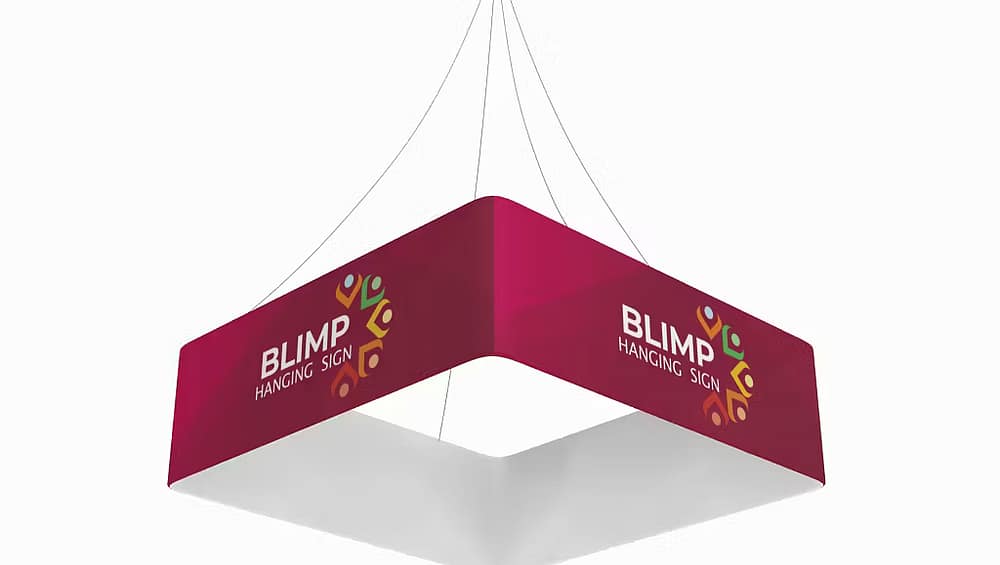
Hanging banners come in several shapes and sizes, and each format serves a distinct purpose. For example, round and square drums deliver consistent 360 degree branding, while long rectangular banners highlight directional messages. Additionally, tapered and sculpted forms can emphasize a focal logo or product image. Therefore, selecting the right shape depends on sightlines, booth location, and the message you want to broadcast.
Product families and core components
Most hanging banner systems include a set of numbered aluminum tubes, snap-fit joints, and a tensioned zippered fabric sleeve. Consequently, assembly is fast on the trade show floor. Furthermore, kits typically include rated hanging points or brackets for attaching cables and carabiners, and many vendors supply a padded carry case for transport. Keep a rigging checklist with spare carabiners, cables, and zip ties so you are prepared for venue requirements and last minute changes.
Specifications and material quality
When evaluating products, prioritize build quality. For instance, verify tube wall thickness, joint integrity, and rated hanging points. Additionally, choose dye-sublimation printed matte fabric sleeves that preserve color accuracy under show lighting and photograph well. Finally, request fire-retardant documentation and confirm compliance with venue rigging policies to avoid delays or rework.
Matching banner types to booth goals
Match the banner style to your objectives. If you need wayfinding, long rectangular banners work well. In contrast, drums and circular banners increase visibility from all directions, making them ideal for island booths. Moreover, standardizing sleeve sizes allows local teams to translate copy without redesign, and therefore saves time when exhibiting internationally.
Portability and setup process
Portability matters for teams that travel frequently. As a result, choose lightweight aluminum frames and sleeves that pack flat into a single case. Because many systems use numbered parts, two people can complete setup quickly. In addition, count on basic tools or no tools at all for assembly, and always test the complete rigging at ground level before lifting into position.
Use cases and creative combinations
Hanging banners are versatile. For example, combine multiple banners at varying heights to create layered visual pathways, or pair a central drum with smaller directional flags to draw traffic from different aisles. Moreover, use tall rectangular banners behind product demos to maintain brand presence while keeping the front of the booth open for conversations.
Maintenance and safety considerations
Routine maintenance extends the life of your hanging banners. Therefore, clean fabric sleeves according to supplier instructions and store frames in protective cases to avoid dents. Additionally, always review venue load limits and secure hardware with rated fittings. For peace of mind, carry spare hardware and plan for rapid on-site repairs.
Next step: Explore our full range of Hanging Banners.
Conclusion: Choosing the right hanging banner
In summary, hanging banners deliver high-impact visibility while preserving valuable booth floor space. By focusing on shape, material quality, rigging specifications, and portability, you can select systems that meet both creative and logistical goals. Ultimately, the right hanging banner increases brand reach and improves attendee navigation, and therefore is an essential component of a professional trade show presence.