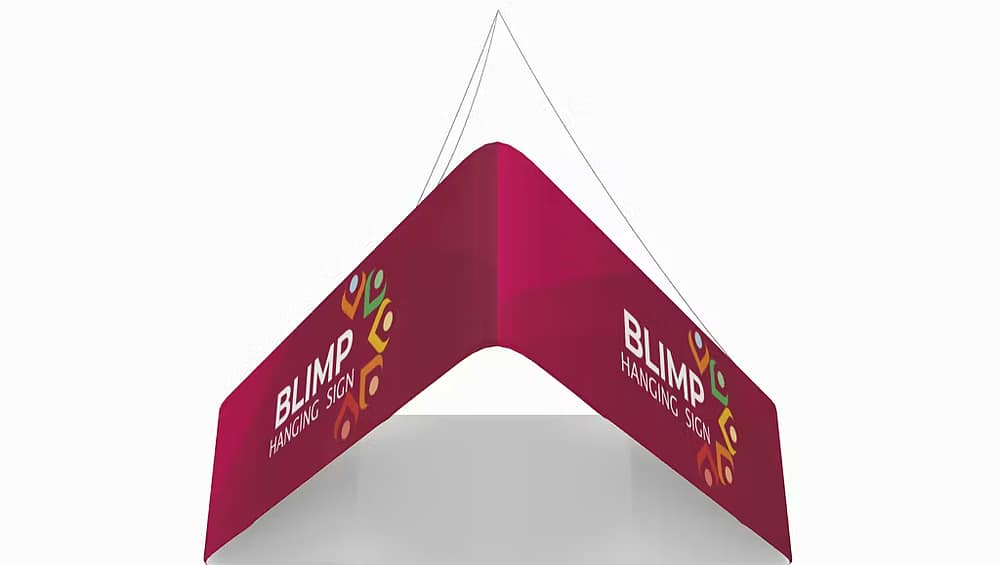
The Role of Hanging Banners in Creating a Cohesive Booth Experience
Introduction: Elevate Your Booth Presence
Hanging banners lift your brand above the crowd, and therefore they guide attendees to your booth sooner. They free up valuable floor space, so you can design open, inviting layouts for demonstrations and private conversations. Moreover, a well designed hanging banner establishes a focal point that ties together all visual elements in your exhibit.
General Information about Hanging Banner Products
Hanging banners include a broad range of shapes, sizes, and mounting systems. Consequently, they work with convention hall rigging, truss systems, and temporary frames. In addition, many options offer internal or external illumination to maintain presence in varied ambient light conditions. As a result, hanging banners are a versatile category that complements retractable banners, lightboxes, and booth graphics.
Specifications: Sizes, Shapes, and Visibility
Choose dimensions and proportions that match aisle sightlines, and then scale type size for readability at distance. For example, large circular or rectangular banners perform well suspended high above 10 meters, while smaller shaped banners work best when placed closer to traffic paths. Moreover, consider weight and wind load for indoor rigging, and always confirm ceiling clearance as well as sprinkler and lighting locations.
Product Highlights: What Makes a Great Hanging Banner
- High contrast typography for distance readability, and therefore faster brand recognition.
- Durable print materials that resist fading for repeated use across shows.
- Modular attachment points that allow rotation and angle adjustment toward main traffic flows.
- Optional internal illumination so your message remains visible even in uneven light.
Components and Material Quality
Most hanging banners combine a printed fabric or vinyl skin with a lightweight frame and reinforced edges. In addition, features like sewn sleeves, reinforced grommets, and integrated mounting plates standardize installation and reduce wear. Therefore, prioritize ripstop fabrics with fade-resistant inks when you expect multiple events each year.
Use Cases: Trade Shows, Retail, and Wayfinding
Trade Shows and Expos
At exhibitions, hanging banners act as primary identifiers, and they increase approach rates by improving sightlines from far aisles. Consequently, teams can convert more walk-bys into meetings while keeping floor space open for product demos.
Retail and Pop-up Events
In retail environments, hanging banners create zoned merchandising and seasonal promotions. Moreover, they can hang above high foot-traffic areas to direct attention without interrupting shopper flow.
Conferences and Wayfinding
For conferences, use hanging banners to mark registration, session rooms, and sponsors. As a result, attendees navigate complex floorplans more quickly, and event staff reduce congestion at key nodes.
Portability and Setup Process
Lightweight frames and quick-connect fittings make hanging banners easy to transport and assemble. Furthermore, standardized sleeves and attachment points help local teams install graphics without design changes. For best results, maintain a rigging checklist with spare cables, carabiners, and fasteners, and then test the complete assembly on-site prior to the show opening.
Integrating with AV and Lighting
Coordinate with AV and lighting teams so colors remain accurate and hotspots are avoided. In addition, rotate or angle banners toward main traffic sources to maximize exposure while maintaining clearance from fixtures. Therefore, a combined approach enhances brand impact and supports consistent photo and video capture from media and attendees.
Finally, measure impact using approach paths, meeting counts, and badge scans, and then iterate placement and creative for future events. In the meantime, if you are ready to compare sizes and configurations, Explore our full range of Hanging Banners.
Conclusion: Cohesion, Visibility, and Return on Space
Hanging banners deliver cohesive booth experiences by improving visibility, preserving floor layout, and reinforcing brand messaging. Therefore, they are an essential category for organizations that exhibit frequently, and they provide measurable benefits in attendee attraction and wayfinding. In summary, choose durable materials, plan placement with sightlines in mind, and coordinate with event teams to maximize the return on your overhead real estate.