Lightweight Yet Durable: The Construction Secrets of Hanging Banners
Updated: November 09, 2025
Hanging banners are a high-impact way to capture attention from above, and they offer a practical solution for exhibitors who want visibility without using floor space. For this reason, event planners and brand managers favor them for busy trade shows and retail activations. Below is a category-focused guide that explains how hanging banners perform, what makes them reliable, and creative ways to use multiple banners together.
General information about hanging banners
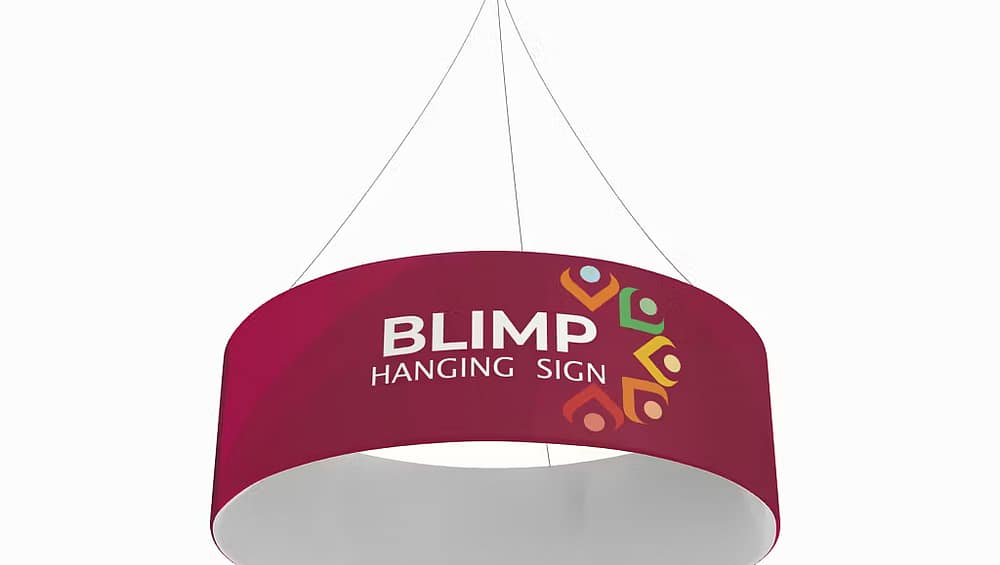
Hanging banners refer to overhead fabric or vinyl displays that suspend from ceilings, trusses, or temporary rigging points. They save floor space, and therefore they keep aisles clear for demonstrations and meetings. Moreover, they lift messaging high above eye level so visitors can spot your brand from a distance, which improves booth traffic and wayfinding.
Specifications and components
Standard hanging banner systems use aircraft-grade aluminum tubes for frames because they balance rigidity with reduced weight. In addition, stretch polyester or high-quality knit fabrics are common for graphics since they absorb dye-sublimation inks for rich colour and minimal glare. Components typically include labeled frame sections, locking fittings, a fabric sleeve or hem, certified rigging cables, and hardware such as carabiners and turnbuckles.
Design features and material quality
Design choices influence visibility and longevity. For example, double-sided prints increase reach, while seamless dye sublimation avoids wrinkles and harsh reflections under overhead lighting. Furthermore, reinforced hems and corner patches add strength at suspension points. As a result, a well-constructed banner resists stretching and keeps artwork crisp through repeated use.
Portability and setup process
Hanging banner systems are built for repeat assembly and efficient transport. First, frame sections connect with indexed connectors and locking pins so teams can assemble quickly. Next, the fabric sleeve slides over the frame and secures with a zipper or Velcro for a taut finish. Finally, rigging cables attach to certified points for safe suspension. Because these parts are lightweight, local staff can handle most installs, and therefore you often only need minimal tools such as a screwdriver or a small driver for accessories.
Use cases in trade shows and retail activations
In exhibition halls, hanging banners act as visual beacons, and they help attendees orient themselves to your location. Likewise, in retail environments, they define departments and seasonal promotions without blocking sightlines. For experiential marketing, combine overhead banners with floor signage and illuminated displays to create layered brand presence that draws visitors into immersive zones.
Product category advantages in large venues
Hanging banners maximize vertical space and reduce footprint constraints, which is especially useful in crowded venues. They also allow multiple teams to share coherent branding across a large footprint, and therefore they are cost effective for multi-booth campaigns. Additionally, because fabric prints are lightweight and foldable, shipping costs are lower while on-site rigging remains straightforward.
Creative uses of multiple hanging banners
When you combine several hanging banners, you can create overhead corridors, colour blocks, and directional systems. For instance, alternating shapes and heights adds depth, while staggered graphics create movement that guides foot traffic. Furthermore, modular frames let you swap panels between events so messaging stays fresh without investing in new hardware.
Care, storage, and checklist
After events, fold fabric sleeves into soft pouches to avoid creases, and protect frame sections with foam tubing to prevent scratches. Also, bag all rigging hardware and update an inventory checklist that includes spare carabiners, cables, and zip ties. Finally, export artwork at the correct scale with bleed and safe margins, and test contrast on a distant monitor to ensure legibility from afar.
For a closer look at product options and to choose the right hanging banner for your next event Explore our full range of Hanging Banners.
Conclusion
In summary, hanging banners offer a lightweight, durable, and highly visible category solution for exhibits and retail displays. By focusing on robust frame alloys, premium fabrics, and simple assembly workflows, you gain consistent performance and reduced on-site complexity. Consequently, choosing the right hanging banner system boosts visibility, saves floor space, and supports repeatable event success.