From Fabric to Display: What Fabric Banners Are Made Of and How They’re Built
Introduction
Fabric banners are a versatile category of display products that blend visual impact with portability. Whether you are planning a trade show booth or updating retail signage, fabric banners deliver rich color and a soft, premium finish. Moreover, they adapt to a wide range of display systems, so you can create cohesive branding across events and locations.
General information about the fabric banners category
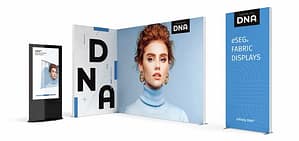
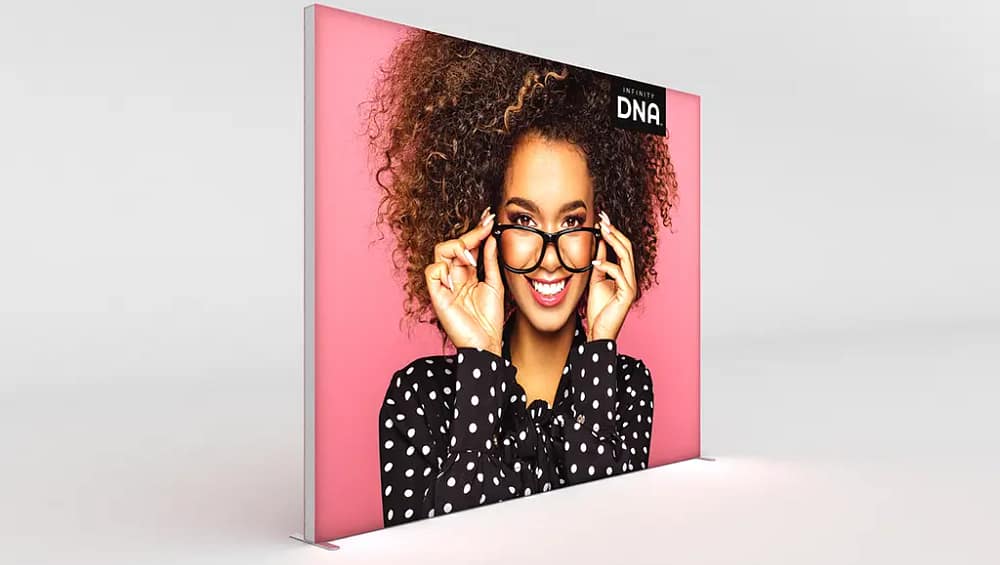
Fabric banners include a variety of formats such as tension fabric backdrops, pop-up fabric displays, hanging banners, and framed fabric graphics. In addition, many fabric options are printed using dye-sublimation to produce vibrant, long-lasting color that resists fading. For customers exploring product options and styles, our curated selection makes it simple to find the right fabric banner for any environment, and you can browse specific styles in the following collection: Fabric Banners Collection.
Materials and construction
Most fabric banners use polyester blends because polyester balances color fidelity, durability, and wrinkle resistance. Specifically, knit and woven polyester are common. Furthermore, construction details such as heat-pressed hems, reinforced corners, and sewn pole pockets increase longevity. Manufacturers often add silicone edge graphics for framed installations, while grommets and pole pockets provide simple attachment for hanging banners. Consequently, you receive a finished product that looks professional and stands up to repeated setup and breakdown.
Design features and variations
Fabric banners come in single-sided and double-sided prints, with options for opaque backings when light-blocking is needed. Additionally, finishing choices like sewn hems, finished edges, and silicone-sealed edges allow banners to integrate with frames, stands, and trade show kits. When selecting a banner, consider factors such as viewing distance, desired finish, and whether you need seamless prints for large backdrops. These considerations help ensure the design matches your event goals and brand standards.
Use cases and creative combinations
Fabric banners excel at trade shows, retail windows, product launches, corporate events, and photography backdrops. For example, pair a tension fabric backdrop with matching table throws to create a unified brand presentation at a booth. Also, combine hanging fabric banners with freestanding pop-up displays to guide traffic and reinforce messaging across a venue. Because fabric folds compactly and prints remain bright after repeated use, event teams often reuse pieces across campaigns, which reduces cost and waste over time.
Portability and setup process
One reason fabric banners are favored by exhibitors is ease of setup. Typically, banners are shipped folded in a carry bag and attached to lightweight aluminum frames or rail systems on site. First, unpack the banner and frame, then stretch the fabric over the frame or insert the silicone edge into the channel. Next, secure any hardware and adjust tension. Finally, make quick visual checks to smooth wrinkles and align artwork. As a result, a small team can achieve a finished look in minutes, which makes fabric banners ideal for busy event schedules.
Conclusion
In summary, the fabric banners category delivers flexible, high-impact display solutions that combine premium print quality with reliable construction and simple setup. Therefore, if you need dynamic branding that travels well and scales from small pop-ups to large backdrops, fabric banners are a smart choice. As a result, you can expect consistent visuals, faster installations, and reusable assets that support your marketing goals across events and retail environments.