Comparing WaveLine® InfoDesks vs. Traditional Reception Counters
For Australian organisations, the choice between mobile counters and fixed joinery now shapes how visitors experience a brand from the moment they arrive. Comparing WaveLine® InfoDesks vs. traditional reception counters highlights a shift from static front desks to agile, campaign-led environments. Businesses running activations, open days or touring programs increasingly need systems that can move with them, without sacrificing professionalism. At the same time, hospitals, corporate headquarters and civic buildings still depend on robust, built-in structures that anchor security and wayfinding. Understanding how each solution works is central to making a confident, long-term investment.
Understanding the role of reception and info desks
Reception and information points act as control centres for visitor flow, brand storytelling and basic customer service. In event settings, they double as event registration counters, literature pick-up points and troubleshooting hubs. In permanent workplaces, they manage check-ins, deliveries and increasingly digital sign-in systems that sit alongside interactive information kiosks. Both contexts demand visibility, accessibility and intuitive layouts that make it obvious where to go for help. The question for decision-makers is less “do we need a desk?” and more “which type of front-of-house solution best fits how we operate?”
WaveLine® InfoDesks as a flexible front-of-house solution
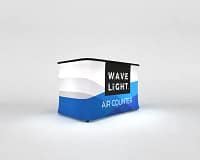
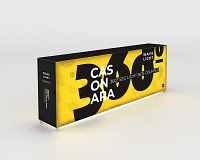
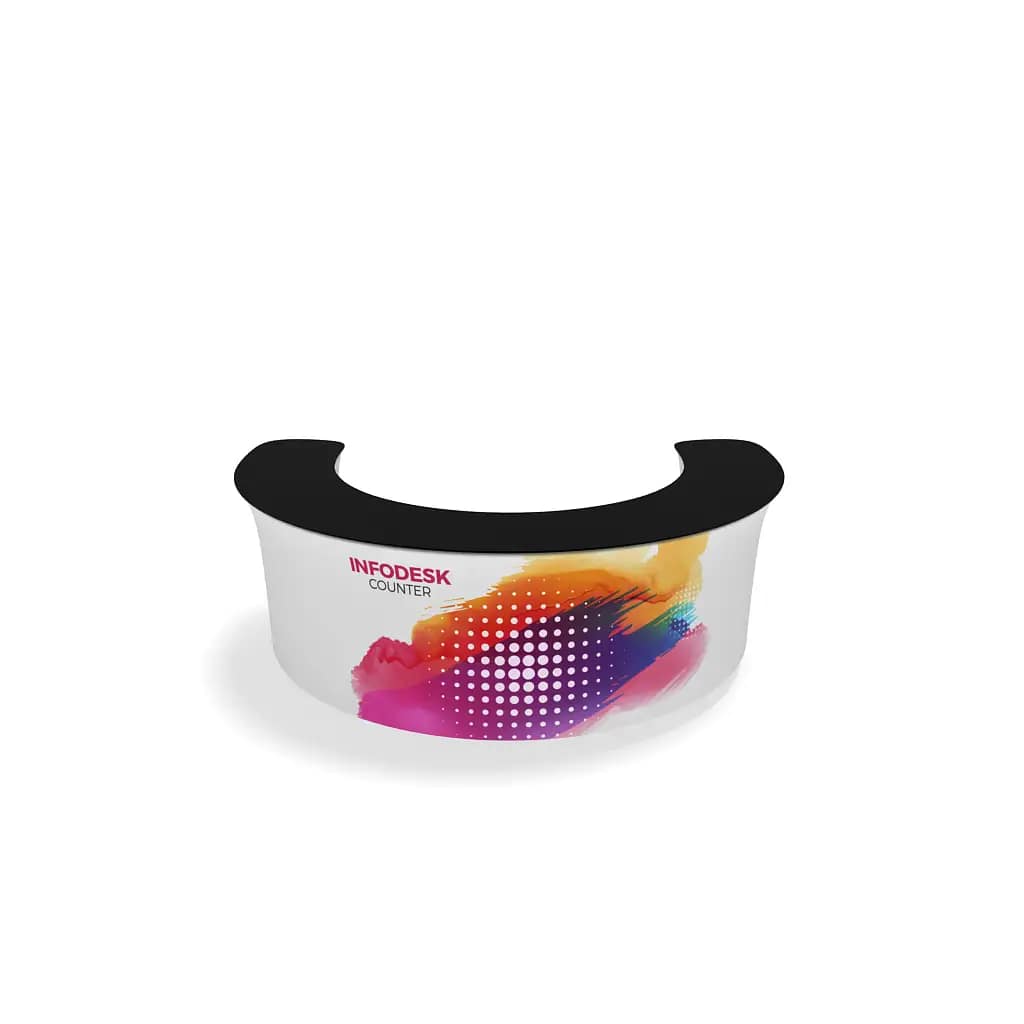
WaveLine® InfoDesks are designed for mobility, built from lightweight frames and tension fabric display stands that pack into compact cases for travel around Australia. These portable exhibition counters suit brands that appear at multiple venues each year, from convention centres to shopping centre pop-ups. Graphics can be refreshed between campaigns, turning a single structure into reusable exhibition furniture that evolves with marketing priorities. Configurations spanning straight, curved or modular display furniture layouts let teams scale from a single check-in pod to a full trade show welcome desk. For many marketers, the lower capital outlay and minimal storage footprint are just as compelling as the visual impact.
Traditional reception counters for permanent spaces
Traditional reception counters remain the backbone of many Australian offices, medical centres and educational campuses. Constructed from timber, laminate or solid surfaces, these branded reception counters are engineered for durability, integrated cabling and secure storage. They comfortably support desktop computers, EFTPOS terminals and other fixed hardware that staff rely on daily. Their permanence can be a strength, creating a clear landmark within the building’s architecture and aligning with broader interior design. However, once installed, these structures are difficult and costly to relocate, making them less suitable for organisations that frequently reconfigure space or operate pop-up programs.
- Frequency of events versus day-to-day office traffic.
- Need for mobility, including interstate roadshows and regional tours.
- Volume of equipment, collateral and storage required at the counter.
- Branding flexibility across campaigns and locations.
- Budget, installation constraints and long-term maintenance expectations.
When comparing options, operations and marketing teams should map touchpoints across a typical year: trade fairs, community outreach, lobby refurbishments and seasonal campaigns. Organisations with heavy event calendars often benefit from custom display solutions that combine portable branded kiosks and lightweight promo counters with a smaller, permanent base. More static environments may lean towards a single investment in joinery, occasionally hiring mobile units for off-site activations. Blended strategies are emerging too, where headquarters retain a fixed desk while regional teams travel with compact trade show welcome desks configured from modular systems.
For leaders weighing investments, the decision increasingly revolves around flexibility, lifecycle cost and the visitor journey. Portable systems can reduce hire fees and freight while giving marketers control over messaging across multiple sites. Fixed joinery offers stability, storage and a strong architectural anchor where people expect a staffed front desk. Many organisations now mix both, using mobile counters as overflow points during peak times or as satellite help hubs at large events. To navigate specifications and pricing, speaking with a display specialist can clarify whether mobile counters, traditional joinery or a hybrid approach will deliver the most adaptable and efficient front-of-house environment.