Updated: September 11, 2025
Long-Term Value of Investing in Counters & Cases
Introduction
Counters & cases offer exhibitors a reliable way to combine presentation, storage, and transport into one investment. By choosing products designed for repeated use, you not only improve on-floor branding, but you also reduce operational friction at every event. In addition, well-chosen counters and cases keep your team organized, speed setup, and present your brand professionally.
General Information About the Category
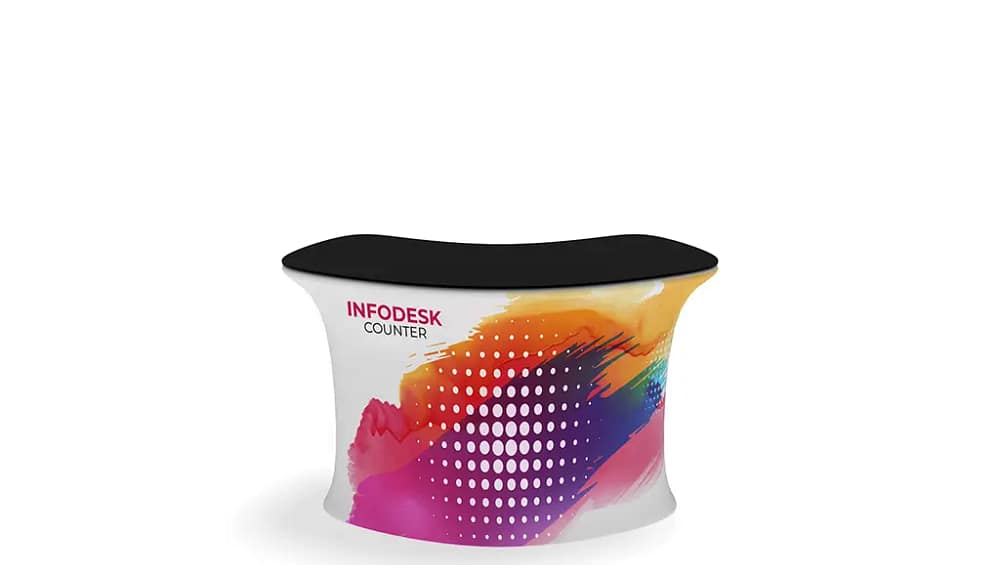
Counters & cases are a category of display solutions built for trade shows, pop-ups, retail activations, and corporate events. They typically pair a lightweight hardware frame with swappable graphic wraps, and they often include an internal storage case that doubles as a work surface. Consequently, these units act as both a branded focal point and a protective transport solution, which makes them a smart choice for exhibitors of all sizes. Explore sizes, graphic options, and accessories for your next activation here: Counters & Cases.
Specifications and Material Quality
Most counters are manufactured from aluminum frames, ABS or polypropylene panels, and printed fabric or PVC graphics. As a result, they remain light enough for one person to carry, yet sturdy enough to withstand repeated use. Furthermore, many cases include foam inserts or protective corners to prevent damage in transit. When evaluating options, look for reinforced seams on graphics and lockable latches on cases for secure storage and long service life.
Design Features and Components
Counters often include modular shelves, internal shelving, and integrated lighting options. Moreover, removable graphic wraps allow you to refresh messaging without buying new hardware. Similarly, cases are commonly built with wheels and telescoping handles for smooth transport, and they sometimes double as packing crates that convert into display surfaces. Together, these features simplify logistics while reinforcing your brand through consistent visuals.
Portability, Setup Process, and Storage
Portable counters are designed for fast assembly, and therefore they minimize labor costs. Typically, setup takes less than ten minutes, and no tools are required. For example, pop-up frames pop into place while magnetic or clip-on graphics attach quickly. In addition, the compact cases fit into most booth storage areas and reduce freight volume, so you will pay less for shipping and handling over time.
Use Cases and Creative Applications
Counters & cases work well as welcome desks, demo stations, product sampling points, and check-in counters. In retail, they serve as temporary point-of-sale islands, while at events they guide visitor flow and centralize collateral. For agencies running multiple activations, the modular nature of the category allows a single set of hardware to support different campaigns simply by swapping graphics and accessories.
Cost Savings and Long-Term ROI
Investing in durable counters and cases reduces replacement cycles, and therefore it lowers total cost of ownership. Because graphics are swappable, you can update branding affordably, and because cases protect your equipment, you avoid frequent repairs. Consequently, your initial purchase pays off across many events through savings on freight, setup labor, and replacement hardware.
Setup Checklist and Best Practices
- Confirm booth layout and cable routing before arrival.
- Pack spare graphic wraps, cleaning cloths, and fasteners.
- Verify case dimensions for freight or airline rules to avoid surprises.
- Label cases and components to speed pack-down and reduce errors.
- Position counters to guide visitor flow and create a clear focal point.
Conclusion
Ultimately, Counters & Cases deliver measurable long-term value by combining durable construction, flexible design, and logistics-friendly transport. Therefore, when you prioritize quality and modularity, you gain a display solution that reduces costs while improving visitor experience and brand presentation. Invest strategically, and you will benefit from consistent looks, quicker setups, and lower operating expenses across every event.