Suitability of Fabric Banners for Trade Shows, Retail, and Corporate Branding
Introduction
Fabric banners offer a flexible category of display solutions that match the needs of trade shows, retail spaces, and corporate environments. They combine visual impact with lightweight construction, and therefore they are easy to transport and install. As a result, businesses can rely on consistent branding across multiple venues while keeping setup time to a minimum.
General Information
Fabric banners are printed on textile materials that provide vivid color reproduction and a soft, wrinkle-resistant finish. Moreover, they are available in a range of sizes and mounting options, so you can choose the format that suits your space. For a curated selection of styles and supports, explore our Fabric Banners Collection, which includes tension frames, pop-up systems, and hanging displays.
Specifications
Standard fabric banners in this category typically use polyester or blended textiles with dye-sublimation printing for long-lasting color. Additionally, common features include hemmed edges, reinforced corners, and optional grommets or pole pockets for versatile mounting. Because the fabric does not glare under lights, images remain readable from a distance, and therefore they work well under exhibition lighting and in retail windows.
Use Cases
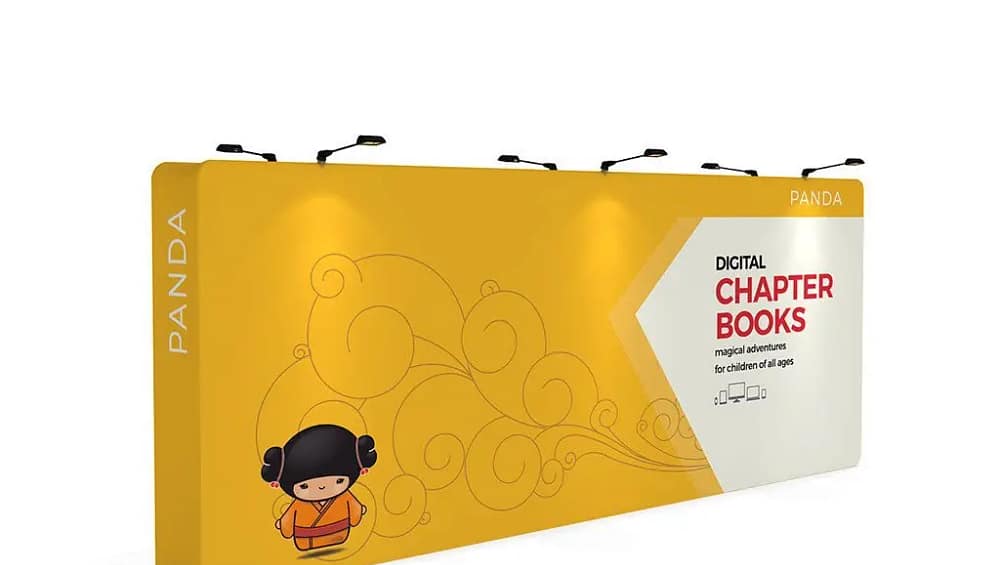
For trade shows, fabric banners deliver large-format graphics without the weight of rigid panels, so exhibitors can move quickly between venues. In retail, they draw attention to promotions and seasonal campaigns while preserving store aesthetics. For corporate branding, fabric banners can create cohesive environmental graphics in lobbies, meeting rooms, and event spaces. In addition, they are well suited to temporary activations and product launches because they are reusable and easy to store.
Product Category Advantages
One major advantage of fabric banners is portability. Since they fold compactly, storage and shipping costs are lower than those for rigid alternatives. Furthermore, fabric resists creasing when stored properly, and therefore banners can be reused for many campaigns. Another benefit is sustainability, because many fabric banners use recyclable materials and low-waste printing methods, which supports corporate responsibility goals.
Creative Uses of Multiple Products
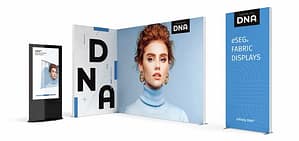
Combine fabric backdrops with smaller tabletop fabric banners to create layered branding that guides visitor attention. Likewise, you can mix tension fabric walls with hanging fabric signs to establish wayfinding in busy trade show booths. For retail environments, pair fabric window banners with ceiling-hung fabric panels to increase visual reach. Consequently, using multiple fabric products together maximizes exposure while maintaining a consistent brand look.
Portability and Setup Process
Most fabric banners are designed for tool-free assembly, and so staff can set them up in minutes. Frames typically click together and the printed fabric slips over the frame for a taut finish. Because the fabrics are lightweight, one person can handle most standard sizes, yet larger systems allow two-person setup. Finally, many solutions include padded travel cases, which protect graphics and simplify logistics between events.
Conclusion
Overall, fabric banners are a versatile and cost-effective category for trade shows, retail promotions, and corporate branding needs. They deliver high visual impact, easy portability, and low storage demands, and therefore they are ideal for teams that need repeatable, scalable displays. With thoughtful combinations and the right specifications, fabric banners will elevate brand visibility across virtually any environment.